
Author: Rajni Nagar (Consultant, Special Education) | 14th Feb 2026

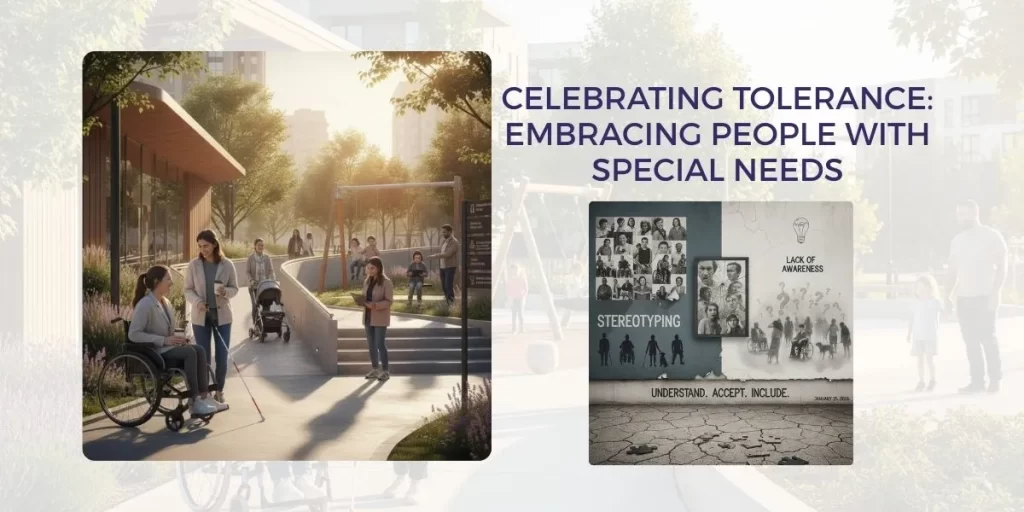
In an increasingly interconnected world, tolerance for diversity is not just a value, but a necessity for harmonious coexistence. Embracing this essential quality allows us to build inclusive communities, reduce conflict, and unlock the immense potential that varied perspectives bring to society. Among us are people with special needs—those who may learn, communicate, or navigate life differently. It’s time to reflect: What does tolerance towards people with special needs truly look like?

What is Tolerance for Diversity?
Tolerance means more than just acceptance—it is respecting, appreciating, and valuing the rich diversity of cultures, beliefs, and ways of life. Also actively accepting and supporting individuals with diverse abilities, backgrounds and perspectives.
Why Tolerance Matters
- Promotes Global Harmony: Tolerance reduces tension and conflict, promoting peaceful coexistence. It allows everyone to feel safe and valued. When we embrace people with special needs, we cultivate environments where all can thrive.
- Enhances Inclusion: Inclusive societies ensure everyone has the opportunity to participate and contribute, regardless of their background
- Builds Empathy: Listening and understanding the experiences of those with special needs develops compassion—a foundation for all healthy relationships.
- Encourages Diversity: Differences enrich our lives. People with special needs contribute fresh perspectives, innovative ideas, and unique talents to our communities, schools, and workplaces.
Challenges to Social Acceptance
Various barriers for social acceptance could arise from:
- Fear or Misunderstanding- Negative perceptions, such as pity, paternalism, and fear, treat disabled individuals as dependent or inferior, leading to avoidance and low expectations.
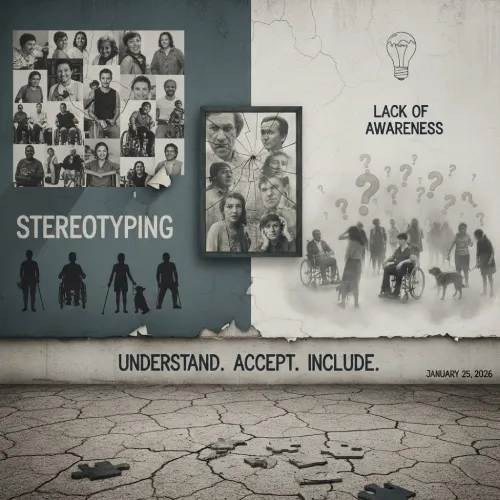
- Prejudice and Stereotyping- Stereotypes portray them as unable to contribute, perpetuating discrimination and social isolation. Exclusion from activities, bullying, harassment, and family stigma prevent integration.
- Lack of Education or Awareness
- Curricula lacking disability awareness fail to challenge misconceptions, leaving students without exposure to diverse abilities.
- Segregated environments reduce positive interactions, sustaining unfamiliarity and discomfort.
- Inadequate enforcement of laws, bureaucratic inefficiencies, and insufficient funding create gaps in inclusion, especially in rural areas.
- Lack of involvement for disabled people in decision-making further entrenches exclusion.
Ways to Foster Tolerance
- Practice Empathy: Put yourself in others’ shoes and seek to understand their feelings, experiences, and perspectives
- Educate Yourself & Others: Learn about various disabilities—awareness dispels myths and reduces prejudice.
- Practice Patience: People with disabilities may complete tasks or communicate differently. Patience creates space for growth and comfort.
- Speak Up Against Discrimination: Challenge jokes, exclusion, or mistreatment. Use your voice to promote respect and inclusion.
- Adapt Environments: Support accessibility, whether through ramps, technology tools, or inclusive teaching methods.
- Be Kind: Sometimes, small gestures—a smile, an invitation, a hello—transform someone’s day.
Beyond Tolerance: Moving Toward Acceptance
Tolerance is the first step, but acceptance and celebration are true goals. Instead of tolerating differences, let’s champion them. Let’s build classrooms, offices, and neighborhoods where differences are not just accepted—they’re celebrated.
People with special needs are valuable members of society. By fostering tolerance, we move towards a culture of empathy, inclusion, and mutual respect. Let’s ensure our words and actions reflect the world we aspire to: one where everyone—regardless of their challenges—feels seen, heard, and valued.
References
Disability https://www.who.int/news-room/fact-sheets/detail/disability-and-health. Accessed 24 Jan., 2026.
Multinational Study of Attitudes toward Individuals with … https://www.specialolympics.org/our-work/research/multinational-study-of-attitudes-toward-individuals-with-intellectual-disabilities. Accessed 24 Jan., 2026.
Global Stigmas and Attitudes Towards Persons With … https://www.igi-global.com/book/global-stigmas-attitudes-towards-persons/355250. Accessed 24 Jan., 2026.
Acceptance of Disability: A perspective from people with … https://ajbes.e-iph.co.uk/index.php/ajbes/article/download/75/pdf/206. Accessed 24 Jan., 2026.
https://www.numberanalytics.com/blog/embracing-diversity-a-guide-to-tolerance. Accessed 24 Jan., 2026.
https://www.linkedin.com/pulse/live-let-others-embracing-tolerance-diversity-syed-shaaz-hussain-gzvzf. Accessed 24 Jan., 2026.