

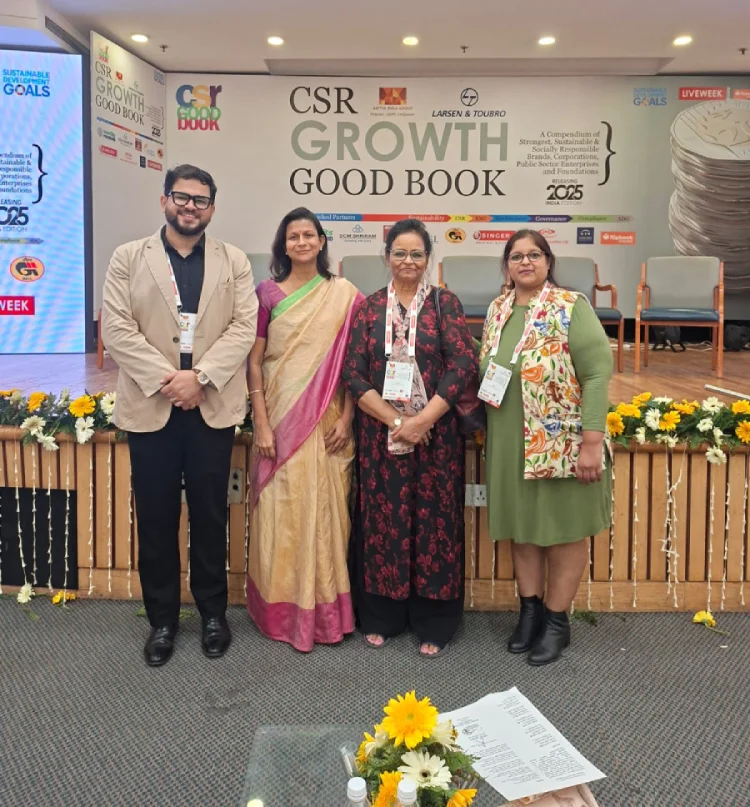
As part of the Continued Professional Developmental Program at NRF, Dr Monika (HOD Occupational Therapy and Joint Head Admin) along with Dr Nidhi Kashyap attended the CSR Good Boom Summit seminar organized at India International Center, Delhi, on 1 October, 2025. Some salient points of the panel discussions are outlined below.
Changing Role of Trustees
The post-lunch session of the CSR Good Book Summit at the India International Centre, Delhi, highlighted the evolving role of trustees in the social sector—emphasizing that they can no longer remain mere figureheads but must emerge as credible, participatory, and innovative leaders who inspire trust and transparency in funding processes. Trustees are expected to play a decisive role in daily operations, decentralize authority, and continuously reinvent their approaches to stay relevant and effective.
Role of the Community
The discussions also underscored the pivotal role of the community, especially in non-chartered or underserved areas, where community need assessments and stakeholder confidence form the backbone of sustainable initiatives. Flexibility and openness to learning from failures were recognized as key enablers of progress.
Trends in CSR and Good Practices
Emerging CSR trends pointed towards technology-driven innovations, employee shram daan (voluntary labor), and incentivized volunteering as integral to maximizing impact. The session recommended integrating CSR responsibilities into core organizational functions, equating them in importance to departments like HR or Accounts, and encouraging rural postings for interns and trainees as part of induction.
Reshaping Agendas 2030
As the 2030 Agenda unfolds, aligning CSR efforts with the Sustainable Development Goals (SDGs) remains a global priority, participants acknowledged significant challenges such as fragmented efforts, overlapping goals, and lack of collaboration among organizations. Many initiatives remain oversubscribed and operate in silos. Moreover, critical areas like disability and the environment continue to be overlooked, as they do not directly align with measurable profit metrics or easily quantifiable outcomes. A coordinated, collective approach is essential to bridge these gaps and ensure tangible progress toward the 2030 goals.
Regular Review and Accountability
The session concluded with a strong recommendation for regular review of CSR policies and practices. Continuous evaluation helps maintain relevance, accountability, and alignment with evolving community needs—ultimately ensuring that CSR efforts deliver sustainable and meaningful social impact.