
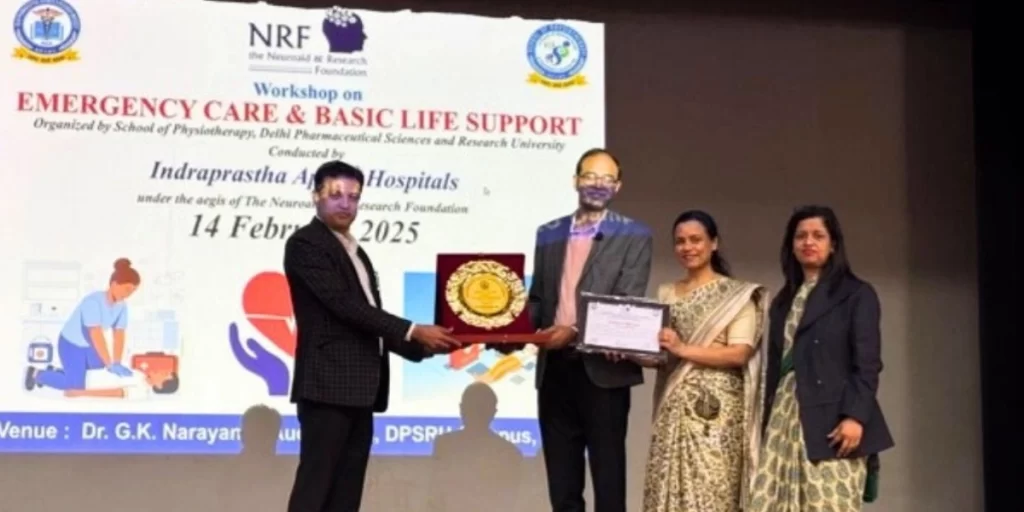
The Delhi Pharmaceutical Sciences and Research University (DPSRU) organized a workshop on “Emergency Care & Basic Life Support” on 14th February 2025, in collaboration with Indraprastha Apollo Hospitals and under the aegis of The Neuroaid & Research Foundation (NRF).
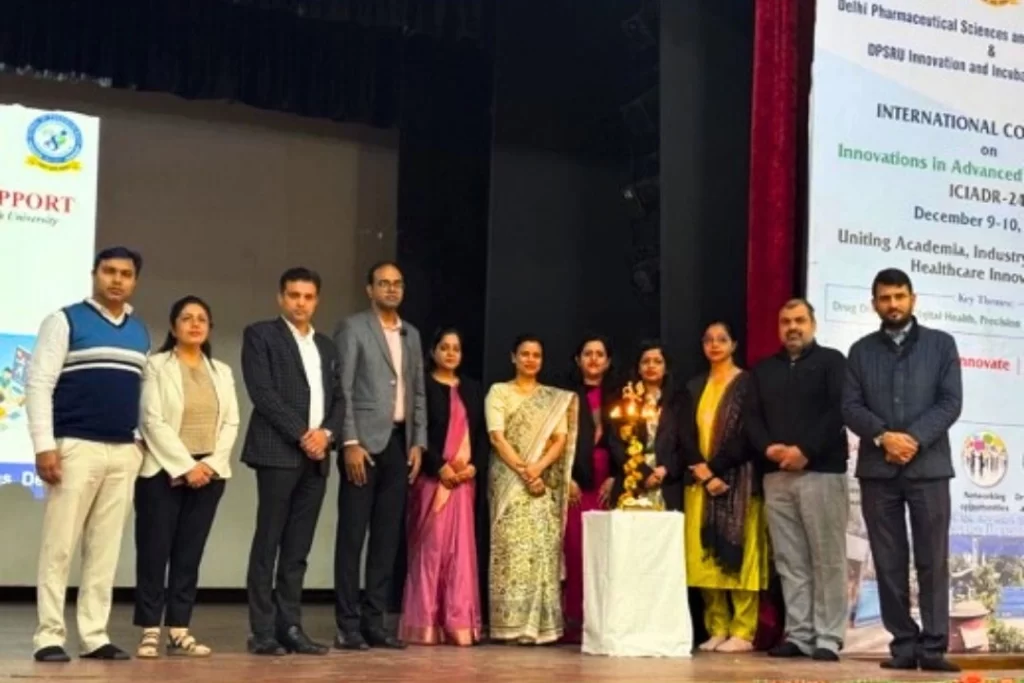
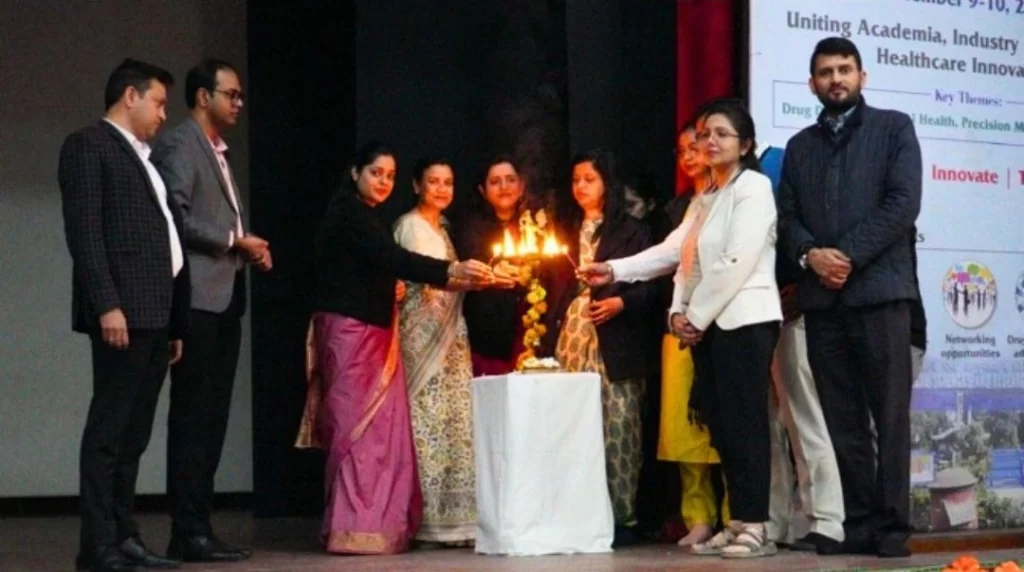
The program began in the auditorium with a warm and light-hearted atmosphere, where all delegates gathered in a spirit of unity. The inaugural lamp-lighting ceremony was graced by the esteemed resource person Dr. Rupam Sadhukhan (Senior Medical Officer & Instructor ACLS & BLS, AHA – Emergency Unit, Indraprastha Apollo Hospital), Prof. (Dr.) Richa Hirendra Rai (B.P.T., M.P.T. – Cardio-Pulmonary, M.B.A. – Finance, C.F.A., Ph.D., PGDHE – School of Physiotherapy, DPSRU), along with the faculty and staff of DPSRU and NRF. Each dignitary lit the ceremonial lamp, symbolizing collective unity and enlightenment.
Dr. Rupam Sadhukhan initiated the technical session by describing the importance of Basic Life Support (BLS). He explained that BLS is a set of essential life-saving medical techniques used to sustain an individual’s life until professional medical assistance arrives. It is particularly crucial in cases of cardiac arrest, respiratory failure, or other life-threatening emergencies. BLS can be performed not only by healthcare professionals and first responders but also by trained laypersons, thereby highlighting its universal importance in emergency care.
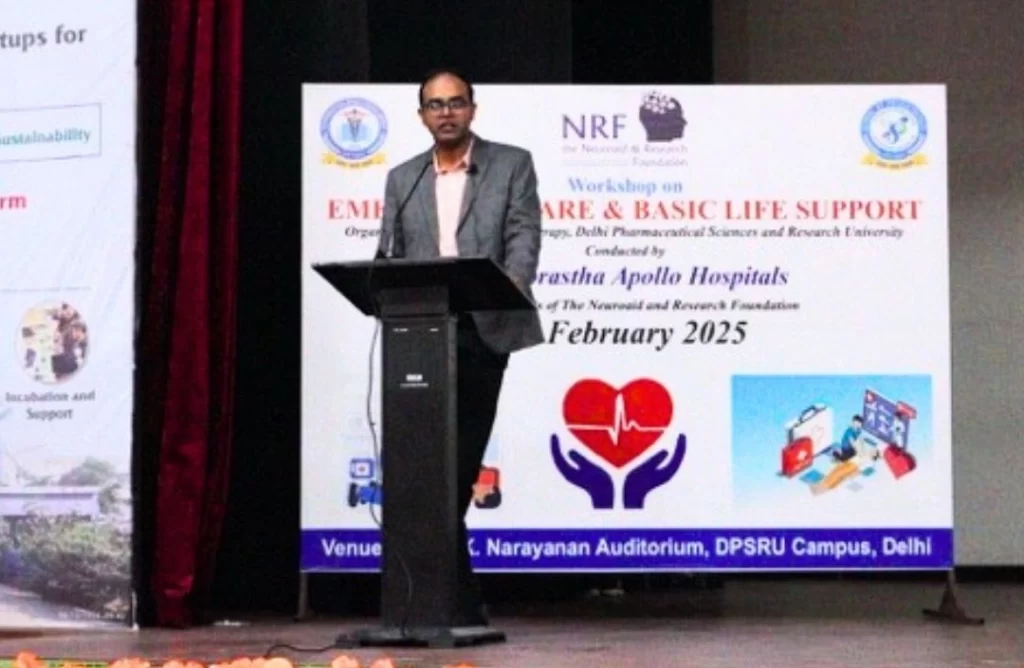
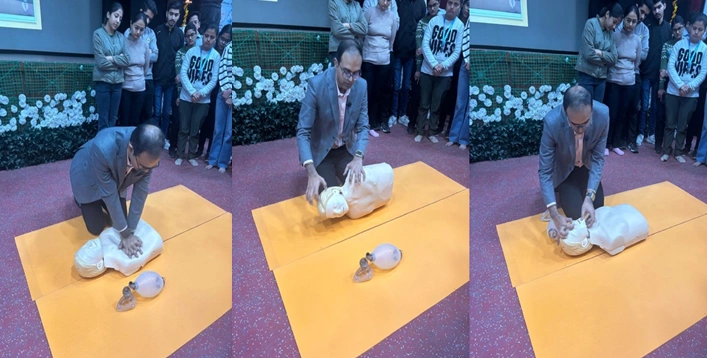
After introducing the participants to the basic knowledge and importance of Basic Life Support (BLS), Dr. Rupam Sadhukhan demonstrated the practical component using a mannequin. He explained the primary phases of BLS, which include:
- Assessment of the Situation – The rescuer must first ensure the safety of both themselves and the victim. Once safety is confirmed, the rescuer should check the victim’s responsiveness by gently tapping and calling out to them. If there is no response, emergency medical help must be called immediately.
- Chest Compressions – If the victim is not breathing or only gasping, chest compressions should be initiated to maintain blood circulation to the heart and brain. Compressions must be performed at a depth of at least 2 inches in adults, at a rate of 100–120 compressions per minute.
- Airway Management – After 30 compressions, the rescuer should open the victim’s airway by tilting the head back and lifting the chin, ensuring the passage is clear for breathing support.
- Rescue Breathing – The rescuer then provides rescue breaths. For adults, the recommended ratio is 30 compressions to 2 breaths, while for infants, it is 15 compressions to 2 breaths. This combination of compressions and breaths ensures circulation and oxygenation until professional help arrives.
Around 50 participants, including students, NRF staff, and DPSRU staff, actively practiced the demonstration on mannequins. The interactive session allowed participants to clear their doubts regarding CPR techniques.
The workshop concluded with the distribution of certificates by Dr. Rupam Sadhukhan. The participants gained invaluable insights into identifying life-threatening emergencies and responding effectively with BLS techniques, reaffirming that timely intervention can make the difference between life and death.”
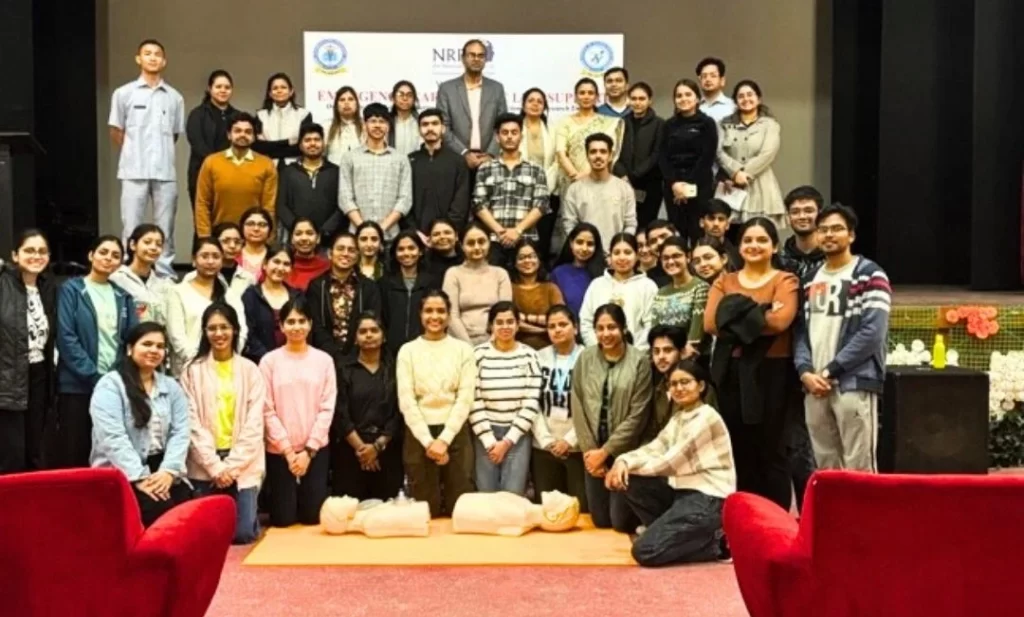
The Neuroaid & Research Foundation (NRF) sincerely expresses its gratitude to Prof. (Dr.) Richa Hirendra Rai for her invaluable support in organizing this successful workshop at DPSRU, and to Dr. Rupam Sadhukhan for graciously sharing his valuable time, expertise, and knowledge with us.