
Author: Jhilmil Rathore (Student Volunteer) | 10th January, 2026

Slow living today has turned into an aesthetic, a trend, something people “schedule” into their lives. But if you strip away all the curated imagery and the performative activities—baking, reading, pottery, journaling—slow living is nothing more than having the space to sit with yourself and your thoughts. It’s basic stability. It’s a fundamental human rhythm. And somehow, we’ve turned that into a luxury.
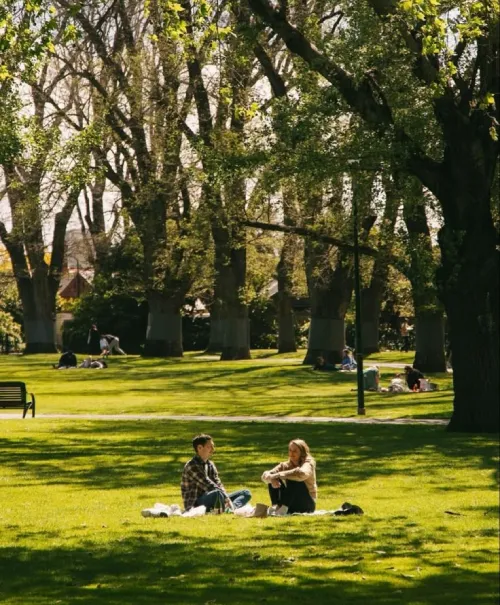
Slowness isn’t something to “achieve.” You don’t attain it by intentionally adding slow-looking tasks to your calendar. You don’t earn it by performing certain activities that supposedly qualify as slow living. What we call “slow living” is simply the state of being grounded enough to exist without rushing. It’s the breathing room life naturally demands from us.
But we’ve squeezed that room out. Deadlines, expectations, responsibilities, and pressure leave us running on tight timelines, constantly compensating, constantly catching up. The slowness that should be woven into daily life is now leaking out of it.
Why is slow living being romanticized when it’s a basic human need? Why do we treat it like a rare event we need to carve out a day for? Slowness shouldn’t be a retreat. It should be embedded into the everyday: walking slowly enough to feel your own steps, eating without a screen, speaking to someone without checking your phone, taking a stroll without plugging your ears with noise, travelling without having 10 downloaded episodes of your favourite show on your device.”
We’re so overstimulated that even waiting for time to move has become uncomfortable. And then, when time moves too fast, we panic and declare a slow day as if it’s some kind of intervention. It’s almost absurd: imagine telling older generations that we now set aside a special day to do the simplest human things—eat, walk, breathe, rest—without distraction. They’d probably chuckle in disbelief.
I remember this shift happening sharply in college, when stimulation became its own kind of drug. With endless events, fests, rehearsals, group plans, and back-to-back commitments, I lived in a constant state of high stimulation. It felt addictive. The busier I was, the more “alive” I felt. And then on the days when things slowed down even slightly, I crashed. Hard. The stillness felt abnormal. Having no task in my hands felt like a threat. I even remember sitting in the auditorium one evening, waiting for rehearsals to end so we could plan hospitality arrangements. All I had to do was sit and watch. I couldn’t. The stillness pushed me into a spiral until I walked out and cried.
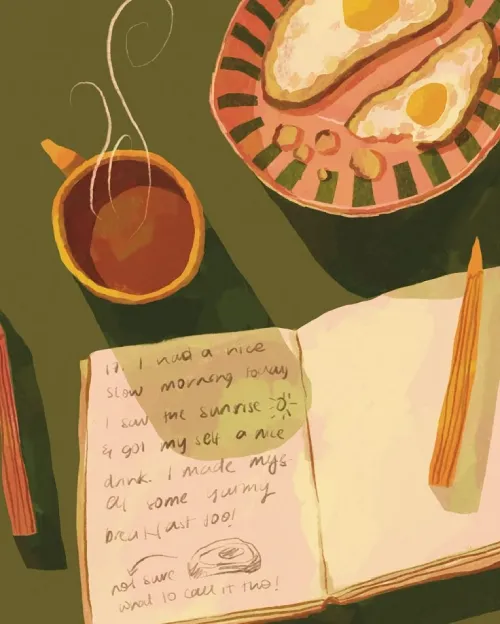
Back then, simply existing felt unbearable. Thinking felt unbearable. I’ve heard other people say the same thing—they’d rather pack their day with noise and engagements just so they don’t have to be alone with their mind. That’s what overstimulation does: it rewires you to fear slowness.
My life now is nowhere near as highly stimulated, and I’ve pulled myself back from the constant buzz of social media and fast-paced content that used to override my brain. I’m trying to unwind the rewiring. I’m allowing myself to sit with the discomfort that stillness brings. I’m relearning that thinking isn’t the enemy. That not every thought has to trigger a crash. That I don’t have to numb my mind with endless tasks just to avoid being alone with myself.
Slow living, in its truest form, is reclaiming that ability—to be still, to think, to let your mind breathe without rushing to silence it with stimulation. It’s not a trend. It’s a basic human reset we’ve forgotten how to access.