
Author: Mihika (Child Guidance Counsellor) | 28th March 2026

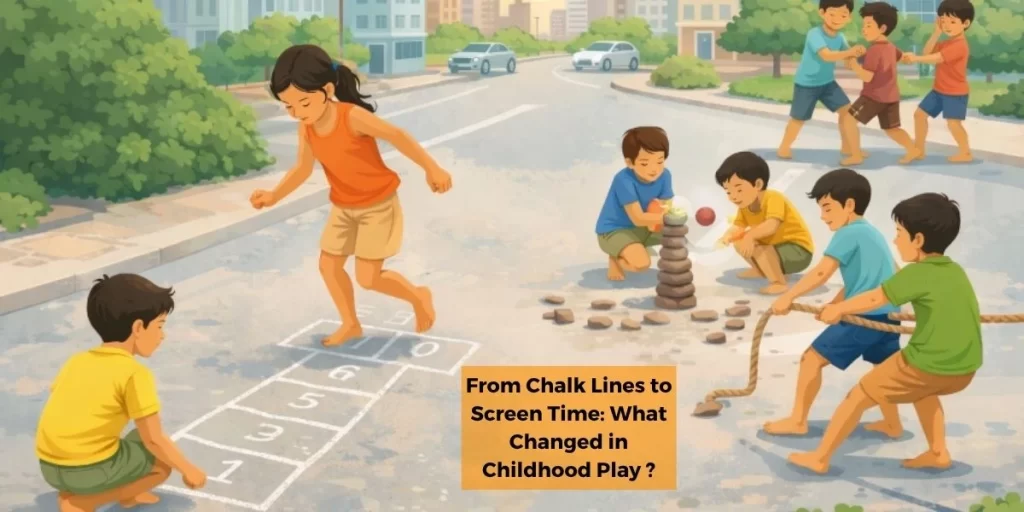
When I reflect on my childhood, my memories are not characterized by toys or screens, but by outdoor indigenous games that filled our evenings with life, laughter and learning. Stapoo drawn with chalk on the ground, chupan chupai that turned hiding corners into spaces of thrill and anticipation, pitthoo garam that was played with flat stones and a soft ball, tug of war that turned dusty lanes into arenas of laughter and rivalry – they were rituals, not just games. As the sun set lower, children came out of all houses, barefoot and excited, ready to play until called back home by one mother or another. There were no schedules, no supervision, no instructions – just the sharing of time, open spaces and the unspoken understanding that evenings were for playing. These moments were simple and unplanned and were full of life.
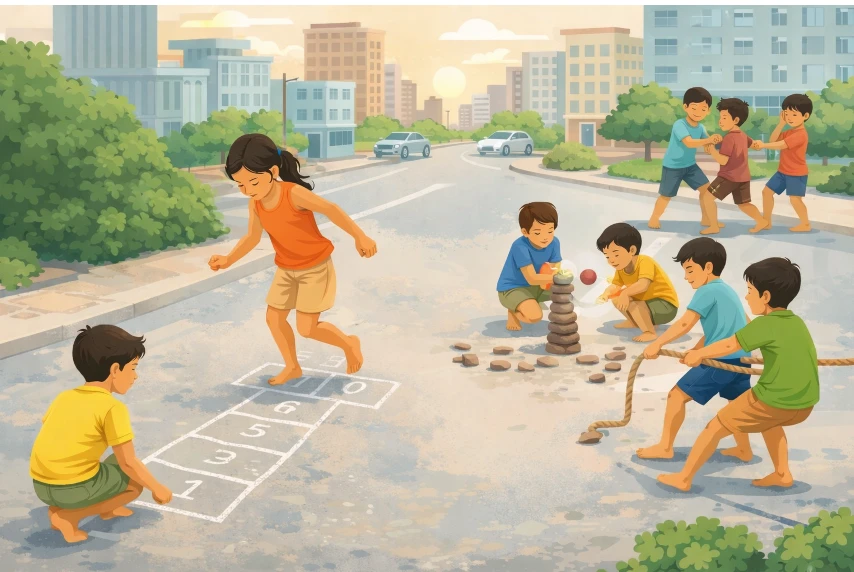
What we didn’t realise at the time was how powerful these games were in the way that they shaped us psychologically. Stapoo quietly developed balance, body awareness, focus and patience. Pitthoo garam required teamwork, strategy, ability to make quick decisions, controlling one’s emotions, and trust in each other. Tug of war taught collective strength – the concept that individual strength is important, but strength in numbers is more important.
Without anyone defining it, these games fostered resilience, cooperation, problem-solving, leadership and emotional regulation. They enabled us to negotiate rules, there were consequences for winning and losing, conflicts were dealt with and we were back playing the very next day. This was the joy of learning, development occurring naturally; not forced.
Fast forward to the present day and the world above seems far away. The chalk drawings are gone, stones untouched and ropes packed up. Evenings that used to be spent outdoors by children are replaced by scheduled time, screen time and confinement indoors. Indigenous games, which once transmitted easily and freely from one generation to the next, are now not often seen, not because they are lacking in value, but because the spaces freedom and time needed for games are gradually disappearing.
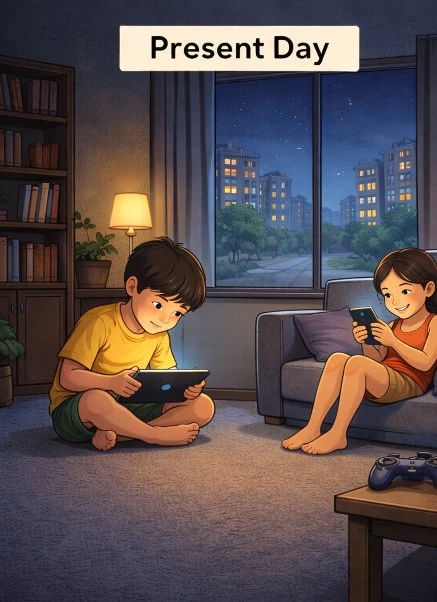
This shift has played its part, silently, in the play deprivation in early childhood. When kids lose access to free and unstructured play and especially, culturally-rooted play, they’re losing a lot more than physical movement. They miss out on developing social skills, emotional resilience, independence and creativity. Screens may be entertaining, but they can’t substitute for the living experience of negotiating rules, falling down and getting back up, waiting for one’s turn or belonging to a group.
Indigenous games embodied local wisdom. They were inclusive, low cost, flexible and highly social. Their absence leaves a developmental gap that is hard for structured activities and digital alternatives to fill. From the psychological perspective, play for a child is not optional – it is essential. It is through play that children make sense of themselves, other people and the world around them.
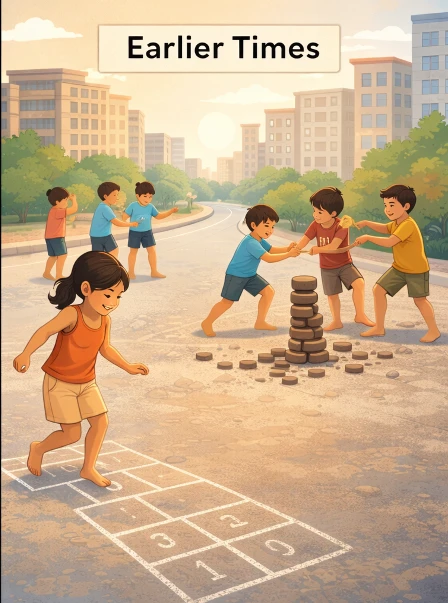
As someone who grew up on the dirt running around and covered in dust and laughter, I feel this loss very acutely. These games influenced my confidence, adaptability and sense of belonging in a way no textbook ever could. Observing today’s children grow up without these experiences makes one stop and think about what is it we are unintentionally taking away from them.
Perhaps it’s time to get these games back, not as a charming memory, but as a living culture. Stapoo, pitthoo garam, tug of war and innumerable other indigenous games have to be given a place in the childhood of today. Because in the preservation of these games, we’re not just saving tradition, we are saving play, we’re saving psychological well-being and childhood itself.